

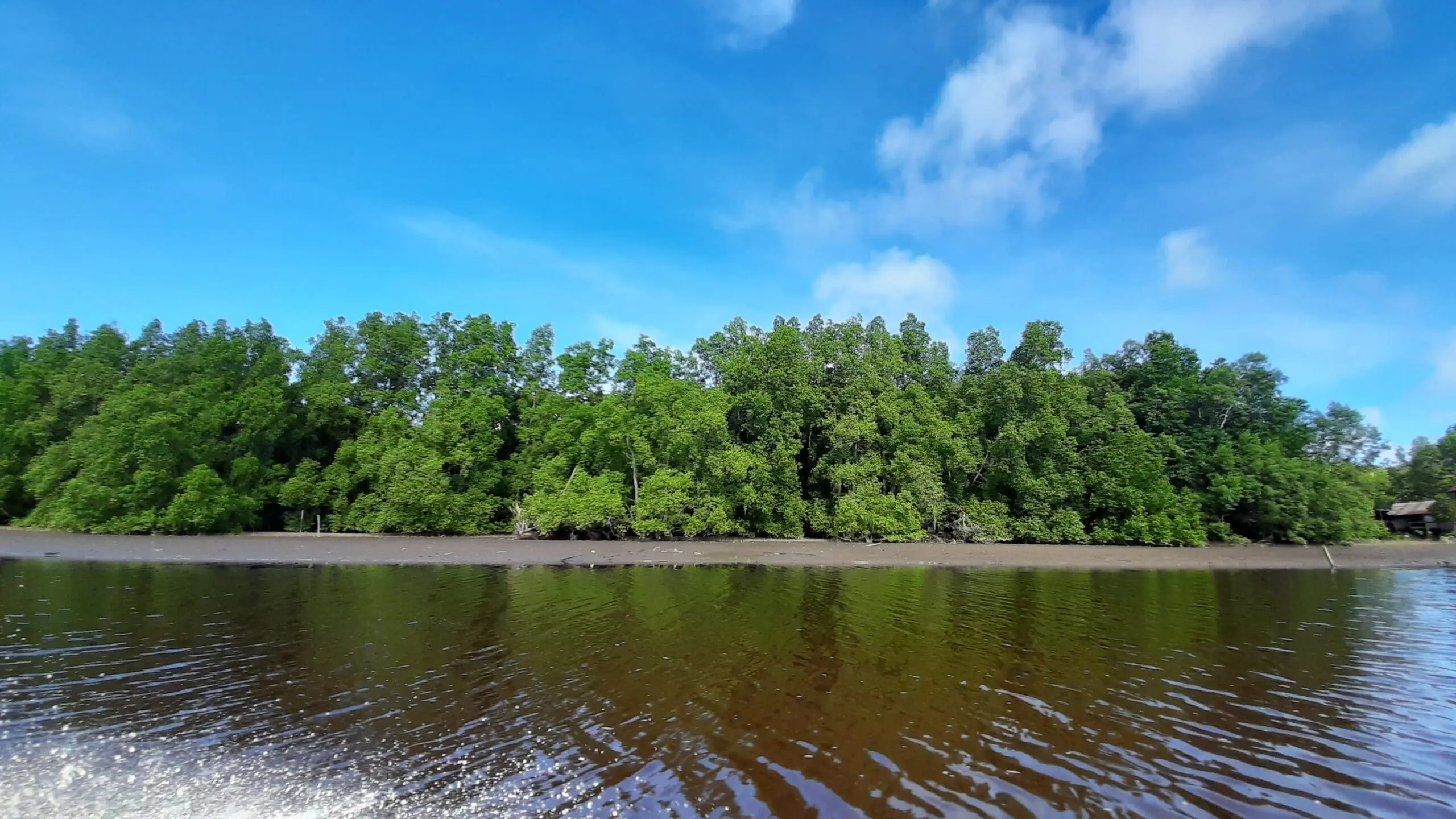
Six villages. Four mangrove zones. One inter-village governance agreement. Written, signed, and being implemented by the communities who live there. Coastal Kubu Raya, the Community Governance Body Mekar Berkarya is using its 2026 CGF Funds of USD 8,983 to do something the conservation sector usually contracts out: design and ratify a PERMAKADES, a formal inter-village governance agreement covering four core mangrove zones. The mangrove channels here are not empty stretches of forest. They are working coastal commons, fished, navigated, monitored, and to be formally governed by the communities who depend on them.
From the people of Mekar Berkarya in their proposal:
Geographically, the Mekar Jaya Hamlet sits at the remote tip of the coastline, it is further out than the rest of the village. What this means for us is recurring floods at high tide, limited access to clean water, and very little arable land. Most of the households here are dependent on fisheries, and opportunities to develop the local economy beyond that sector are narrow.
In our Governance Body, we have identified a stagnation in the economic prosperity of our members. The number of members making regular savings has not grown, and financial literacy and savings and loans operations knowledge is uneven. Furthermore, limited skills in turning catches into value-added products, and administrative bottlenecks, such as questions on vessel legality and business-registration gaps, hold fishers back from formal markets.
Travel distances are limiting the reach of routine health and well-being activities into our area, where access to basic services is already thin. Environmentally, we are facing indiscriminate dumping of waste into the rivers, and ongoing mangrove cutting is eroding both the coast’s natural protective function and the habitat of marine biota.
These are the conditions our 2026 work plan is responding to. This is not a list of grievances, but the operating environment that we as an institution are set up to address from inside.
We will use the funds to:
• Formalize a PERMAKADES, an inter-village governance agreement, covering six villages and four core mangrove zones. This is a community-authored governance instrument, executed under Indonesian customary and village-level legal frameworks.
• Fisher legalisation (PAS Kecil, KUSUKA, NIB) for more than 100 community fishers, opening access to formal markets and reducing the risk of sanctions on the water.
• Strengthening of our CGB working groups, savings-and-loan SOPs, sanitation infrastructure, and river-channel markers.
A cross-village governance system over coastal mangrove zoning with clear boundaries of who may use which parts of the mangrove coast and for what purpose, reduces the risk of overfishing and will define core no-take zones and other management zones for long-term sustainability of fisheries. Joint governance forums create a space where rules, disputes, and monitoring responsibilities can be negotiated openly. Fishers will also be able to operate with legal documents that shift their relationship with formal markets and enforcement; gaining them access to fairer market prices, a position of legitimacy and stability they were previously excluded from
With monthly catch data from 263 fishers, anecdotes turn into evidence, giving the governance system a track for fish stock changes, including seasonal shifts and the early signals of over-extraction. Plus, the organic waste-management system will move the final destination of waste out of the river, and over time, with sorting awareness raised among households, pollution of our waterways will be a thing of the past. Further environmental education, understanding why mangroves and protected wildlife matter, through community signs and school outreach, will instill these values in a new generation.
To underpin long-term environmental change, we also expect an improvement in household financial well-being, where families gain a buffer against the income shocks. The savings-and-loan group provides a community-run financial institution and accessible credit for 65 members, reducing reliance on informal moneylenders and creating a small pool of community capital that can absorb modest emergencies. By helping farmers install hydroponic and basin-media nutrition gardens, which are designed for terrain that floods, food production can withstand potential flooding, and women in the village will be trained in the requested shrimp product processing techniques, opening a value-added step and increasing income at this level.
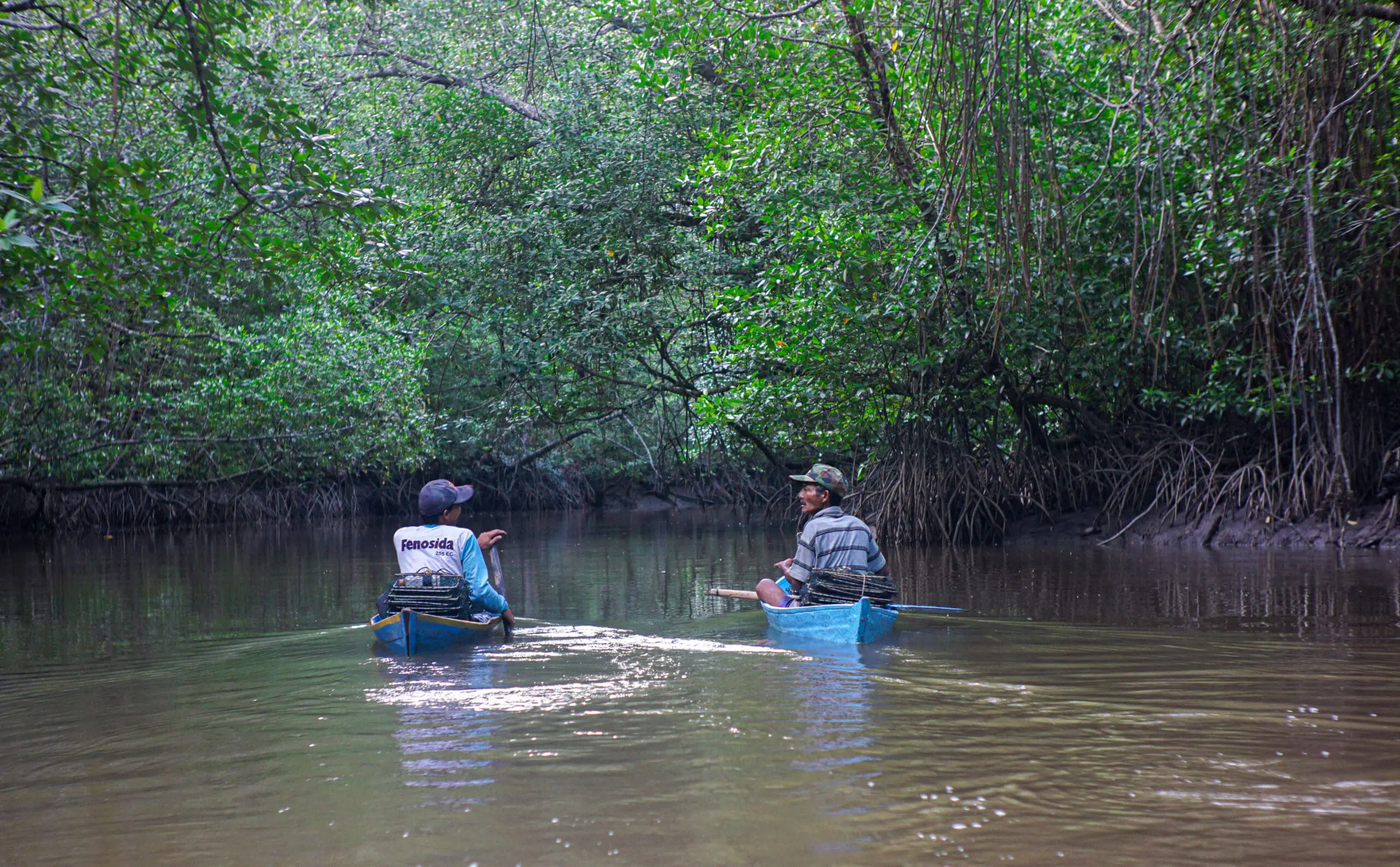
Most climate finance never reaches institutions like Mekar Berkarya. CGF was built to close that gap. This grant size is matched to Mekar Berkarya’s Advanced stage on the Governance Index. With continued technical assistance from Planet Indonesia on certain aspects of their work plan, they are the designers and implementers, with funds landing in their community accounts.
When the funding architecture trusts a community institution to design and run a coastal-governance system, the rules look different. They are written in the languages of the people who will enforce them. They take into account the mangrove zoning that fishers already live by.