About

The Governance Index

A new tool for tracking and analyzing Community-led Governance

Governance here refers to the structures, rules, and mechanisms through which community-based organizations ensure their effectiveness, inclusiveness, and accountability.

In 2023, Planet Indonesia launched this tool to help our community partners identify their organizational needs and strengths, and systematically track our own effectiveness in supporting organizational development.

The tool consists of 25 indicators, adapting established frameworks based on our own expertise and experiences supporting community organizations, which can be applied in a flexible and participatory way to produce a governance index score, categorizing community-based organizations into four levels of governance effectiveness, ranging from "basic" to "independent."

By adjusting financing options to partners’ levels of community-led governance, the fund can provide the right balance of technical support, grant size, and flexibility, meeting communities where they are at.

Startup

Governance Level: Basic
Funding Level:
$1,000 to $3,000
Designed to provide small-scale seed funding for new initiatives led by local communities.

Development

Governance Level: Intermediate
Funding Level:
$3,000 to $6,000
Targets communities that have moved into the development phase of their governance effectiveness.

Growth

Governance Level: Advanced
Funding Level:
$6,000 to $9,000
For established program activities that are demonstrating significant potential.

Independence

Governance Level: Independent
Funding Level:
$10,000 to $15,000
Provides larger-scale funding to enable mature projects to achieve long-term sustainability and independence.

How the Governance Index works

While there exists a variety of high-quality tools for assessing community-led governance, many are very complex or theory-oriented. Seeking something more simple and practical, we mixed and matched aspects from existing frameworks, our knowledge of community-led conservation, and principles for community-led governance (see IUCN’s framework, Elinor, the IIEED SAGE initiative, and Ostrom’s work). 

We finally landed on 25 indicators covering different aspects of governance, ranging from transparency to financial capacity (see Table 1), each featuring a straightforward yes/no question, and a description of acceptable supporting evidence. The percentage of indicators achieved translates into a “governance index” that categorizes CCs into four levels, from “basic” to “independent”. This index allows us to track and analyze how different institutions develop over time.

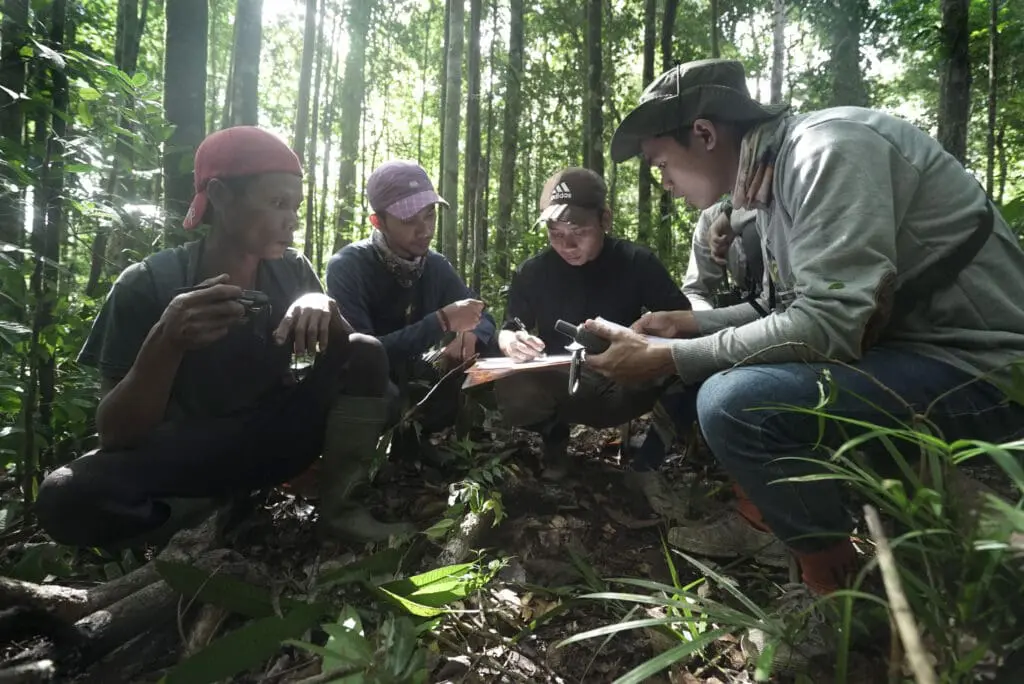
The tool is adaptable for either desk-based completion by field staff and site managers or through field-based focus group discussions with community members and CC leaders. The tool is also designed to adapt to local contexts and aspirations. For example, indicator #25 on rules for profit distribution may not apply to a CC without business units. In that case, we simply ‘silence’ such indicators to not reduce an institution’s overall score simply because an indicator isn’t relevant. 

More about the Collective Governance Fund

Give directly

Contribute to the Collective Governance Fund

The term ‘integrated landscape initiative’ (ILI) has gained popularity as an ‘umbrella concept’ that describes projects that aim to explicitly improve food production, biodiversity conservation, and rural livelihoods on a landscape scale.

It describes approaches that consider the entire landscape, including its environmental, social, and economic aspects, by bringing together diverse stakeholders to manage land use in a way that balances competing needs, aiming for sustainable outcomes across the whole system, rather than focusing on isolated issues within the landscape.