The Collective Governance Fund is committed to transparent, evidence-based communication of impact. On our impact page, you can explore each village supported, their Governance Index level, their member numbers, and how much funding they have received in each funding round.
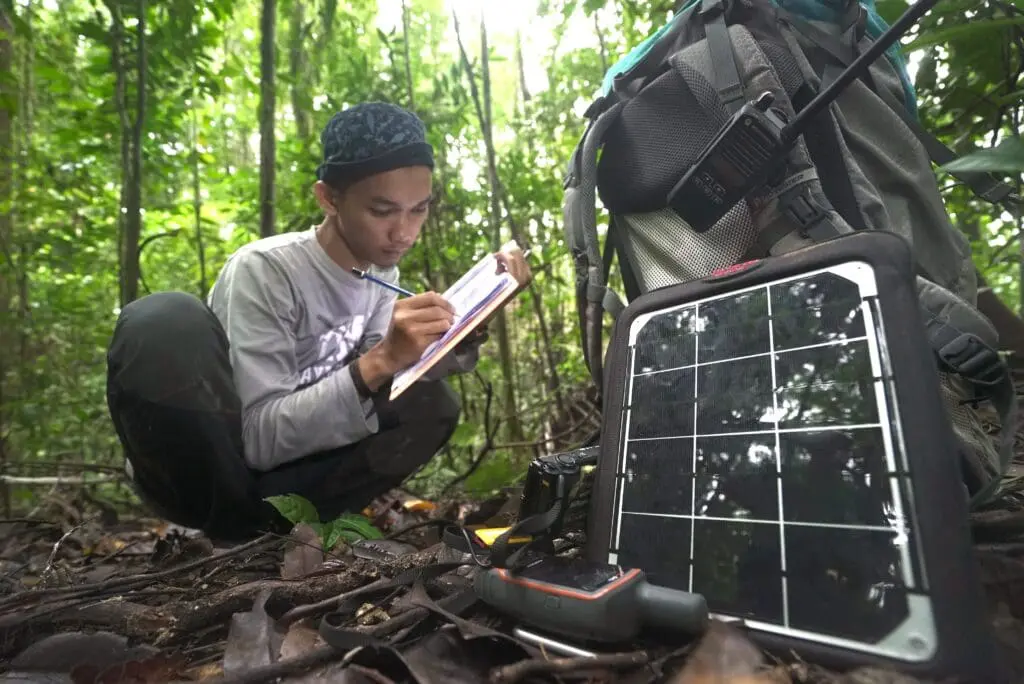
Beyond this, we are working to develop an Environmental Impact Report for each partner village. These environmental assessments are grounded in satellite-derived data that track changes in forest cover, land use, and ecosystem health over time. Four example reports can already be seen on the impact page. Alongside these, we share community-authored proposal reports detailing each village's self-determined work plans and priorities, as well as ongoing measurements of our governance-level index, which captures the progress these Community Governance Bodies make toward independence.
Together, these layers of reporting allow funders, partners, and communities themselves to see not only what is changing on the ground, but how those changes are being shaped by the people leading the work.
The CGF rests on a working track record. Across its current footprint and Planet Indonesia's 2021–2023 Community Grants Mechanism, 63 Community Governance Bodies have managed 342,397 hectares of forest and coastal-marine landscape, with USD 212,823 channelled directly into community accounts.
The underlying community-governance model has been independently evaluated against paired controls: partner villages show 17.9× lower forest-cover loss, exploitative activity drops by roughly 60% within the first three years of partnership, and community-enterprise borrowers operate at a 19% net profit margin (3,701 members currently active in community finance programmes).
A peer-reviewed multi-institution study (Hopkins et al., with NC State, Stanford, UCSF, IPB University, and the London School of Hygiene & Tropical Medicine) used the COVID-19 pandemic as a natural experiment across 726 West Kalimantan villages and found that NGO-affiliated villages had 52% lower weekly forest loss before the pandemic and 68% lower during it, the gap widening precisely when economic pressure was highest, because affiliated communities were decoupled from the timber market. Methodology and paired-control documentation are available in Planet Indonesia’s Annual and impact reports on its learning center.